

Why We Bend 12-Metre Parts in One Setup
Key takeaways
- Two press brakes coupled in tandem give a bed long enough to form oversize parts in one handling.
- Forming in one piece removes the welds, the distortion and the fairing work that sectional construction brings.
- Bending capacity and roll capacity together decide how much of a bucket shell can be formed rather than fabricated.
- Where tandem forming is not possible, we say so and design the alternative properly.
Long parts are where consistency is won or lost
A long plate that has to be formed in two operations is no longer one part — it becomes a joined assembly, with every join bringing heat input, distortion and dressing work. Forming the same plate in a single setup removes all of that at once.
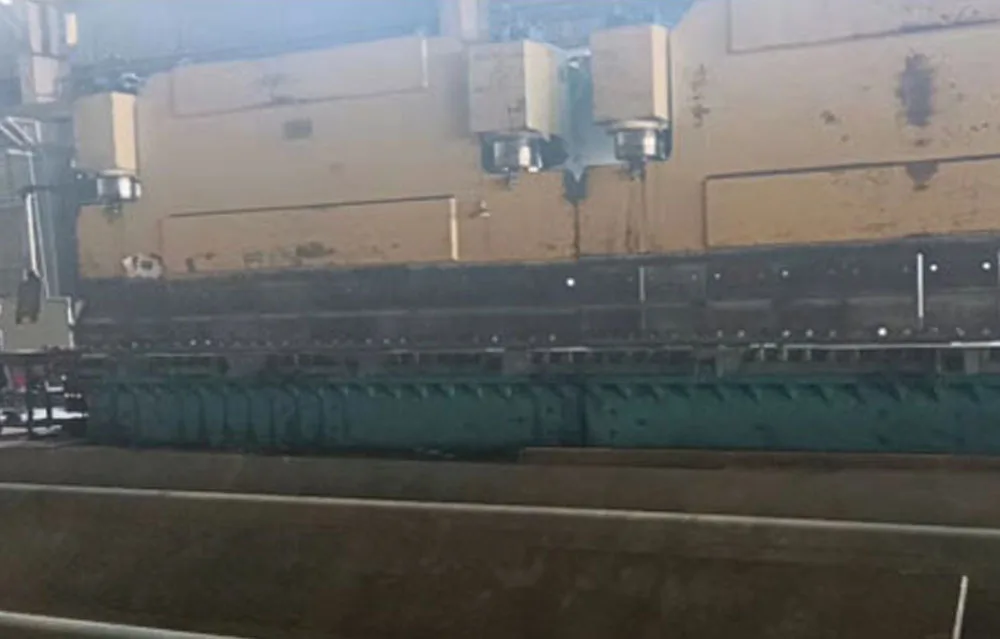
Our bending section includes a coupled tandem pair of CNC press brakes working together on long workpieces, alongside a heavy hydraulic press brake for thick plate, several medium and large machines for batch work, and a set of smaller machines for thin plate and small components. Plate rolls — three-roll machines dedicated to curved work — produce the curved bottom shells that give a bucket its rolling shape.
One setup versus sectional construction
| One-piece forming | Sectional then welded | |
|---|---|---|
| Weld length | None along the formed line | Continuous seam required |
| Distortion | Minimal | Requires sequence control and correction |
| Finish work | Edges only | Grinding and fairing at every joint |
| Batch consistency | Repeatable from the machine | Depends on fitting skill each unit |
That table is the whole argument. Sectional construction is not wrong — sometimes the part is genuinely too big — but where one-piece forming is available it is cheaper, straighter and more repeatable, which is what matters on a repeat order of forty units.
What this means for your drawing
If your part requires a long bend, tell us the developed length and material. Where it fits our bed length we will propose forming it in one piece; where it does not, we will discuss join placement rather than quietly choosing it ourselves. On the value side, our written welding procedures specify a maximum misalignment of 1 mm on fit-up, so any join that is unavoidable is still held to a stated figure.
SHOP FLOOR DATA
| Field | Value |
|---|---|
| Plate rolls | 3-roll, multiple sizes |
| Overhead lifting | Multiple cranes, including 10 t class |
FAQ
Can you form the whole bucket shell in one piece? Usually the curved bottom shell, yes. Whether the sides can be too depends on size — that is a drawing question, not a general claim.
What tolerance do you hold on formed parts? Tangible figures are set on the drawing. Where your drawing is silent we work to our internal forming and fit-up limits and can share them.
Does forming thick plate require special preparation? Thick sections and higher-strength grades need attention to bend radius and direction relative to the rolling grain. Our process notes cover this per part family.
Internal links: insights/shop-floor/inside-the-cutting-bay · products.html#cat-wheelload · insights/technical/s355jr-q355b-material-equivalence
Related: Standard Wheel Loader Bucket · Contact
Request a bulk quote — send us your drawings and order list. We serve distributors, importers, rental fleets and OEM partners on wholesale and project orders.


